Why employees resist AI — and how to fix it
March 30, 2026 · 2 min read · Ai Transformation
The real reasons people push back
Resistance is rarely about the technology. It's about what the technology implies.
- Fear of replacement — "Will AI take my job?"
- Loss of identity — "My expertise won't matter anymore"
- Uncertainty — "I don't know how to use this"
- Trust deficit — "Management is hiding something"
Ignore these, and no rollout plan saves you.
The resistance lifecycle
Most organizations stall between Resistance and Exploration. The fix is deliberate action at each stage.
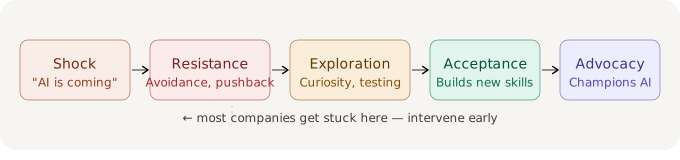
Most companies get stuck at Resistance. Intervene early.
5 interventions that actually work
1. Address job fear directly — don't dance around it Say it plainly: "AI will change how you work, not eliminate you." Vague reassurances backfire. Show a concrete list of tasks that will be augmented vs. automated.
2. Involve early — not after decisions are made Run discovery workshops before selecting tools. Ask: "What would make your day easier?" People resist what's done to them. They adopt what they helped create.
3. Find internal champions Identify 2–3 respected people who are curious about AI. Give them early access and time to experiment. Their peer influence is worth more than any top-down mandate.
4. Train for confidence, not compliance Mandatory 1-hour courses don't work. Run hands-on sprints: give people a real task, let them solve it with AI, debrief. Confidence comes from doing, not watching slides.
5. Make progress visible Share wins publicly — time saved, errors reduced, output improved. Resistance fades when people see colleagues succeeding, not suffering.
What not to do
| ❌ Don't | ✅ Do instead |
|---|---|
| Announce AI with a memo | Hold a live Q&A |
| Roll out to everyone at once | Start with volunteers |
| Focus on cost savings in comms | Focus on ease and impact |
| Ignore the skeptics | Make them co-designers |
| Measure adoption rates only | Measure sentiment too |
The bottom line
Resistance is a signal, not a blocker. It tells you what communication and support are missing. Fix those, and adoption follows.